


Every year, holidays are some of the busiest days in the emergency room. Thanksgiving consistently brings in many patients suffering from cuts, burns, and illness. To help prevent injuries and keep you and your loved ones out of the ER, our staff at Ally Medial share their best Thanksgiving safety tips.
Blog
Seasonal Wellness
Nov 21, 2023
Thanksgiving Safety Tips
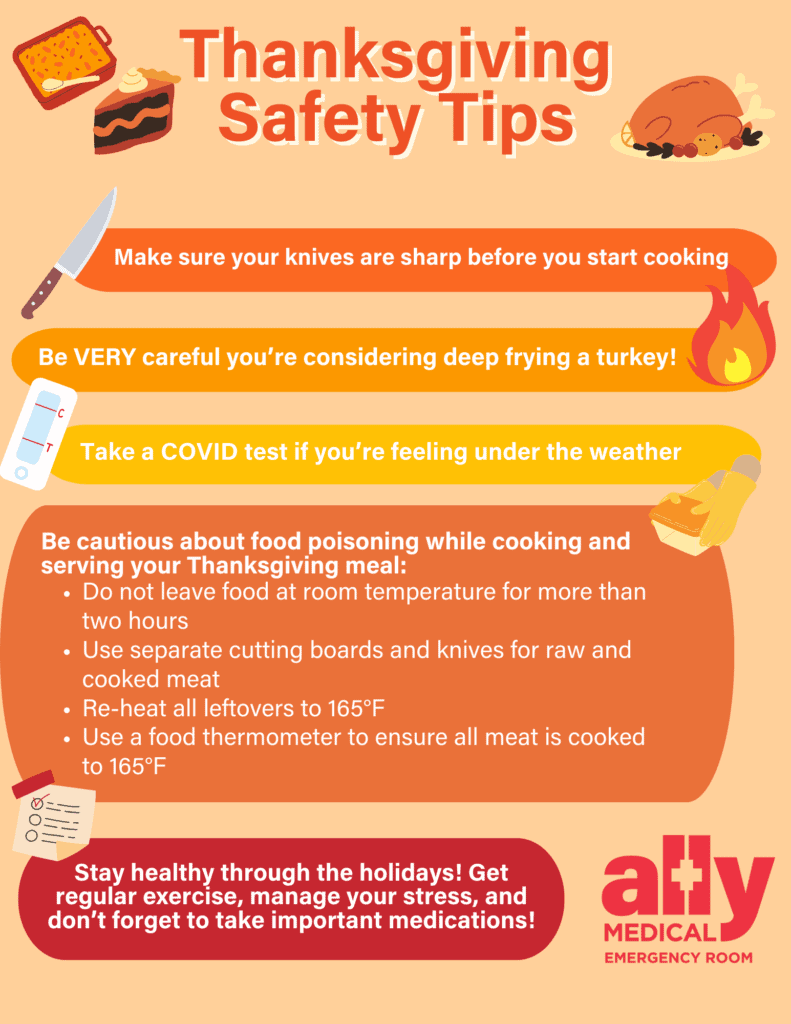
Make sure your knives are sharp before you start cooking Dull knives are more likely than sharp knives to slip and cause a serious injury.
Be cautious about food poisoning while cooking and serving your Thanksgiving meal
Food should not be left at room temperature for more than two hours.
Use a food thermometer to ensure all meat is cooked to an internal temperature of 165 degrees Fahrenheit.
Use separate cutting boards and knives for raw and cooked meat to prevent cross-contamination.
Re-heat all leftovers to 165 degrees Fahrenheit to kill bacteria that could make you sick.
Take a COVID test if you’re feeling under the weather, especially if you have not received an updated booster shot or are spending time with immunocompromised loved ones.
If you’re considering deep frying a turkey, maybe don’t! Cooking with deep fat turkey fryers can be very dangerous, often resulting in serious grease fires and burns.
Don’t let the holiday festivities throw you off your normal routine–make sure you continue to stay healthy by getting regular exercise, managing your stress levels, and taking your prescribed daily medications if you need them.
Ally Medical operates seven emergency rooms in Texas with locations in Bastrop, Central and South Austin, Clear Lake, Dripping Springs, Round Rock, and Spring. All of our emergency rooms are open 24/7—including Thanksgiving—with little to no wait. Each Ally Medical Emergency Room is prepared to treat major and minor medical emergencies, including cuts, burns, and serious illness, for children and adults in a safe, stress-free environment!
Share:
Related Posts
ConditionsSeasonal Wellness
January 31, 2026
Dehydration in Winter: Yes, It Can Still Happen
Dehydration is often associated with hot summer weather, but it can be just as common, and just as dangerous, during the winter months. Cold temperatures, dry air, and seasonal illnesses can all contribute to fluid loss, sometimes without people realizing it.
ConditionsSeasonal Wellness
January 30, 2026
High Fever in Children: What’s Normal and What’s Not
Fevers are one of the most common reasons parents seek medical care for their children. While a fever can be a normal response to infection, certain temperatures, especially at specific ages, may signal the need for emergency evaluation.
ConditionsSeasonal Wellness
January 29, 2026
Slips, Falls, and Wipe-outs: When a Fall Needs ER Care
Slips, falls, and wipe-outs are more common during winter months, when wet pavement, icy surfaces, and bulky footwear increase the risk of losing balance. While some falls result in minor bumps or bruises, others can cause serious injuries that require emergency care.