


Is that sharp abdominal pain just gas, or is it a serious condition like a gallbladder attack or appendicitis? Making the wrong call can be dangerous. We outline the critical signs—including fever, rigidity, and specific pain locations—that indicate you need immediate emergency care rather than a wait-and-see approach.
Blog
Conditions
Jan 29, 2026
Stomach Ache or Emergency? When Abdominal Pain Needs the ER
At 2 AM, you're doubled over with sharp abdominal pain. Is this gas that will pass, or appendicitis that could rupture? Making the wrong call could be life-threatening.
Knowing how to read the signals your body is sending is the most crucial step in protecting your health.
Stop and Assess: When is it Sudden, Severe Abdominal Pain?
The severity and timing of pain are the first red flags. If your pain starts suddenly, is extreme, or causes you to double over, you need immediate help.
Before seeking care, assess the pain's location and accompanying symptoms:
1. Red Flag Abdominal Symptoms Requiring Emergency Care
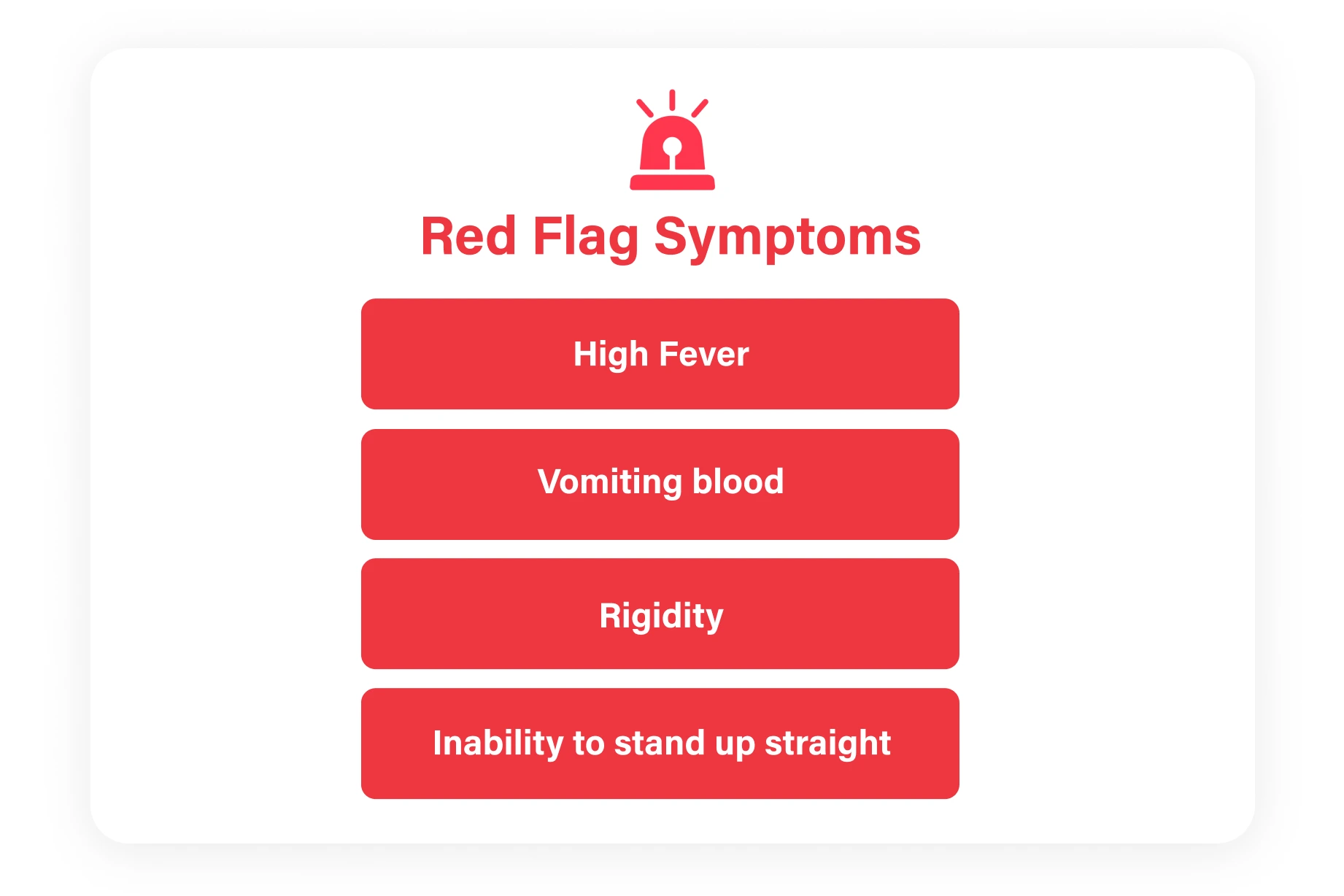
Abdominal pain red flag symptoms
If you experience any of these symptoms alongside your pain, head straight to the Emergency Room:
Pain Accompanied by Fever: A high fever combined with sudden severe pain in any part of the abdomen can signal infection or inflammation (like appendicitis).
Rigidity: Your abdomen feels hard, tender, and stiff like a board when you touch it.
Vomiting Blood or Bloody Stool: This indicates internal bleeding in the digestive tract.
Inability to Move or Stand: If the pain is so severe that you cannot stand up straight or walk normally.
Sudden Drop in Blood Pressure: Feeling faint, dizzy, or having a rapid heart rate (signs of shock).
Where Does it Hurt? Localizing Your Pain
The location of your pain is a major clue for physicians. Generalized, crampy pain (like gas or the stomach flu) is usually less concerning than sharp pain concentrated in one spot.
If you have persistent, localized pain, pay close attention to the area, as it may be linked to certain conditions:
Lower Right Abdomen - Appendicitis (often the pain starts near the belly button, then shifts into the right lower quadrants of your abdomen).
What is appendicitis?: Inflammation and infection of the appendix, a small pouch attached to the large intestine. It must be treated quickly to prevent rupture.
Upper Right Quadrant - Gallbladder attack symptoms (especially after a fatty meal) or liver inflammation.
What is a gallbladder attack?: Often caused by gallstones (pebble-like deposits that form in your gallbladder) blocking the ducts leading from the gallbladder, causing intense pain and potential infection.
Flank/Side (Radiating to Groin) - Kidney stone (often described as intense, wave-like pain that cannot be relieved by changing position), or kidney infection.
What is a kidney stone?: Small, hard deposits of mineral and salt crystals are moving through the urinary tract. The extreme pain comes from these stones blocking the flow of urine.
How to Decide: Stomach Ache vs. Appendicitis (and Other Emergencies)
Many people delay seeking help because they assume their pain is just a bad case of the flu or indigestion. This is dangerous when facing conditions that require timely intervention.
When urgent care or your doctor is appropriate
If your pain:
Came on slowly and is dull, not sharp.
Improves after passing gas or having a bowel movement.
Is clearly related to a recent meal (indigestion).
Is not accompanied by fever, vomiting, or rigidity.
When to Get Care Immediately?
If you suspect appendicitis or other acute conditions, do not wait. Appendicitis is marked by pain that typically worsens over 12-24 hours and often settles in the lower right abdomen. Any delay risks rupture, which is a life-threatening emergency.
A sudden flare-up of gallbladder attack symptoms (chills, severe pain in the upper right side radiating to the back/shoulder) also requires immediate attention.
When to Go to the ER for Stomach Pain

An Ally Medical ER staff member taking notes on a clipboard
If your pain meets the criteria for "Sudden, Severe Abdominal Pain," the Emergency Room is the only appropriate choice. Unlike urgent care, the ER provides:
Immediate Diagnostic Capability: We have on-site CT scans, ultrasounds, and advanced lab work to immediately confirm issues like appendicitis, internal bleeding, or kidney stones.
Surgical Readiness: If you require emergency surgery (such as an appendectomy or treatment for a perforation), we are prepared to mobilize hospital-based surgical teams quickly.
Don't risk waiting it out when the cause is unclear. If you are Googling, "when to go to er for stomach pain," and the pain is severe or accompanied by red flags, the answer is always NOW.
Our board-certified emergency physicians and on-site diagnostic imaging provide immediate answers, not hours of waiting.
We are open 24 hours a day, 7 days a week, to handle all medical emergencies.
This content is for educational purposes only and should not replace professional medical evaluation. If you're experiencing severe abdominal pain or any of the emergency symptoms described above, seek immediate care at Ally Medical Emergency Room. For life-threatening emergencies where you cannot safely travel, call 911.
Share:
Related Posts